Croissants are the epitome of French pastry excellence—crisp, golden exteriors giving way to hundreds of delicate, buttery layers that melt in your mouth. For Chef Dominique Ansel, creator of the iconic Cronut and owner of Dominique Ansel Bakery, “Making croissants is a labor of love and dedication—a lifelong baking project.” While this beloved pastry requires time, patience, and precision, it’s far from unattainable. With Chef Dominique’s expert guidance, you’ll learn to navigate the multi-day process, master critical techniques like laminating and proofing, and troubleshoot common pitfalls. Whether you’re a home baker looking to elevate your skills or a culinary enthusiast chasing that perfect honeycomb interior, this comprehensive guide will walk you through every step to creating bakery-worthy croissants in your own kitchen.
The Essence of a Perfect Croissant: What Sets It Apart
A exceptional croissant is defined by three key elements: layers, texture, and flavor. Visually, it should have a glossy, deep golden crust with distinct, flaky ridges. When sliced, the interior reveals a uniform honeycomb structure—air pockets of even size, neither too dense nor too sparse—created by layers of butter melting during baking, releasing steam that lifts the dough. Flavor-wise, it balances buttery richness with a subtle yeasty aroma, no overwhelming tang or sweetness. Achieving this requires mastering the “DNA” of the croissant: a well-developed levain (sourdough starter) that tempers the butter’s richness, high-quality ingredients, and precise control over temperature and timing. Unlike simpler pastries, croissants rely on the laminating process—folding butter into dough repeatedly—to create those signature layers, making patience and attention to detail non-negotiable.
7 Pro Tips for Croissant Success from Chef Dominique Ansel
Chef Dominique’s decades of experience have yielded invaluable insights to make your croissant journey smoother. First, prioritize levain: this sourdough starter isn’t just for flavor—it balances the butter’s fat, adding depth without the sharp tang of sourdough bread. Second, master rolling pin technique: use gentle, even pressure when flattening dough to avoid crushing layers, and barely any pressure when stretching and rolling triangles into shape. Third, invest in quality ingredients: fresh all-purpose bread flour and high-fat European-style butter (83-84% butterfat) are non-negotiable—good butter is malleable and elastic even when cold, acting as the “clay” that creates layers. Fourth, control dough temperature: if dough gets too cold, butter becomes brittle and breaks; if too warm, butter melts and seeps out. Keep countertops cool, work quickly, and minimize hand contact to avoid warming the dough. Fifth, use a light touch: when shaping and applying egg wash, gentleness preserves the delicate layers you’ve built. Sixth, cool properly: let croissants reach room temperature before slicing with a sharp serrated knife to avoid crushing layers. Finally, judge success by the honeycomb: a perfect croissant’s interior should resemble a beehive, with a yeasty, buttery aroma that invites immediate enjoyment.
The Multi-Day Process: Step-by-Step Croissant Tutorial
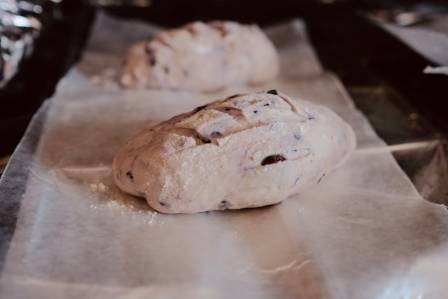
Making croissants is a three-day journey that rewards patience—here’s Chef Dominique’s step-by-step method. Day 1: Prepare Dough and Butter Block Start by making the base dough: dissolve 12g instant yeast (preferably SAF Gold Label) in cold water, then mix with 560g all-purpose bread flour, 29g softened high-fat butter, 72g granulated sugar, 1 large egg, 15g heavy cream, 12g kosher salt, and 68g prepared levain in a stand mixer with a dough hook. Mix on low for 1 minute, then medium for 3-4 minutes until the dough is elastic and forms a single piece (gluten development will be minimal). Proof in a greased bowl for 1.5-2 hours until doubled, then punch down, shape into a 10-inch square, wrap in plastic, and refrigerate overnight. For the butter block, draw a 7-inch square on parchment, flip it, place 284g softened high-fat butter in the center, cover with another parchment sheet, and spread evenly to fill the square—refrigerate overnight. Day 2: Laminating, Cutting, and Shaping Remove the butter block and let it soften for 5-10 minutes (pliable but not melting). On a floured surface, place the cold dough square, center the butter block (rotated 45 degrees like a diamond), and fold the dough’s corners over the butter to seal. Roll the dough into a 20x10-inch rectangle (¼-inch thick) with steady pressure, then perform a “letter fold”: fold the top third down, bottom third up, wrap, and refrigerate for 1 hour. Repeat this folding process two more times (three total folds), refrigerating 1 hour between each. Trim the dough’s edges to form a neat rectangle, then score and cut into 3x10-inch isosceles triangles. Refrigerate the triangles for 30-60 minutes. Working one at a time, gently stretch each triangle 2-3 inches (avoid tearing), then roll from the wide end to the tip, ensuring the tip is tucked under to prevent unraveling. Place the shaped croissants on a parchment-lined pan (4 inches apart), wrap, and refrigerate overnight. Day 3: Proofing and Baking Remove the croissants from the fridge, keep covered, and let proof at room temperature for 2-3 hours until tripled in size (light, fluffy, and jiggly—avoid overproofing, which causes collapse, or underproofing, which leads to dense layers). Preheat the oven to 375°F (190°C) conventional or 350°F (175°C) convection. Make the egg wash by whisking 2 eggs, a pinch of salt, and a dash of milk. Gently brush the croissants with egg wash (light pressure to avoid deflating), then bake for 12-15 minutes until golden brown. Let cool briefly before serving—they’re best eaten within 5 hours of baking.
Troubleshooting Common Croissant Problems
Even seasoned bakers face challenges—here’s how to fix three common issues. Problem 1: Chewy, Bready Texture Small air pockets and a tough, chewy crumb indicate overhydrated dough, often caused by excess water in the recipe or humid 环境. Solution: Reduce water by 1-2 tablespoons, adjust based on dough consistency (it should be supple but not sticky), and account for humidity by using slightly less liquid on damp days. Problem 2: Dry, Overbaked Edges A dry outer ring means the oven temperature was too low, requiring longer baking time that dries out the crust before the interior is done. Solution: Preheat the oven thoroughly (use an oven thermometer to confirm accuracy) and bake at the recommended temperature—faster baking sets the crust and cooks the interior simultaneously, preserving moisture. Problem 3: Uneven Shape and Air Pockets A concave bottom and irregular honeycomb structure signal under-proofed dough, which lacks the strength to hold its shape during baking. Solution: Extend proofing time by 15-30 minutes if unsure—better to proof a little longer than risk underdeveloped dough. As Chef Dominique advises, “Making croissants is really difficult, but it’s not impossible; it just requires a lot of patience. If your first batch isn’t perfect, keep trying.”
Creative Ways to Serve Homemade Croissants
Freshly baked croissants shine on their own, but they’re also incredibly versatile—here are Chef Dominique’s top serving ideas. Sweet Twists: Top with homemade orange marmalade, berry jam, or a dollop of clotted cream for a classic French treat. For a decadent dessert, slice and toast, then serve with vanilla ice cream and chocolate sauce. Savory Delights: Stuff with fluffy scrambled eggs (try Chef Gordon Ramsay’s recipe), ham, and melted Gruyère for a luxurious breakfast sandwich. Or whip up Chef Thomas Keller’s mayonnaise, mix with canned tuna or chicken, and fill a croissant for a quick, elegant lunch. Side Dishes: Toast croissant slices, brush with garlic butter, and bake until crispy for homemade garlic bread—perfect for pasta nights. Tear croissants into pieces and add to salads for a buttery crunch, or use them to make croutons for soups. Beverage Pairings: Enjoy with a cup of freshly brewed coffee (espresso or latte) to balance richness, or a glass of cold milk for a comforting breakfast. For a special occasion, pair with a crisp sparkling wine or a light rosé.
Chef Dominique Ansel’s Complete Croissant Recipe
Ingredients
For the Dough: 12g (4¼ tsp) instant yeast (SAF Gold Label preferred), 203g (¾ cup + 1¾ tbsp) cold water, 560g (4¼ cups + 2½ tbsp) all-purpose bread flour (plus extra for dusting), 29g (2 tbsp) high-fat unsalted butter (softened, 83-84% butterfat), 72g (⅓ cup + 1¾ tsp) granulated sugar, 1 large egg (29g), 15g (1 tbsp) heavy cream, 12g (2⅛ tsp) kosher salt, 68g (¼ cup) prepared levain, nonstick cooking spray.For the Butter Block: 284g (2½ sticks) high-fat European-style unsalted butter (softened, 83-84% butterfat).For the Egg Wash: 2 eggs, 1 pinch kosher salt, 1 dash milk (whisked together).
Equipment
Stand mixer with dough hook, plastic wrap, parchment paper, ruler, sheet pan, large offset spatula/bench scraper, pastry brush, whisk, large rubber spatula.
Notes
-
Instant yeast works best for high-sugar doughs; substitute active dry yeast in the same quantity for a slightly denser result.
-
The butter block must be pliable but not melted—if too firm, gently beat with a rolling pin to soften.
-
Levain should be active (bubbly and fragrant) for best results; if you don’t have prepared levain, use a commercial sourdough starter that’s been fed 8-12 hours prior.
-
Croissants are best eaten fresh—store leftovers in an airtight container for up to 2 days, or freeze for up to 1 month (reheat in a 300°F oven for 5-7 minutes).