The 2017 triumph of Google’s AlphaGo system over world champion Ke Jie sparked global debate about the reasoning power of artificial intelligence. However, a far more tangible milestone has recently emerged: humanoid robots competing alongside humans in a Beijing half-marathon. In that event, 21 humanoid robots completed a full 21-kilometre course, marking a shift from lab demonstrations to real-world participation in human environments.
This development reflects a broader technological trend similar to the rise of electric vehicles, which have already disrupted established automotive industries such as Germany’s. It raises an important question: could humanoid robots trigger a similar transformation in global industry and economic systems?
How humanoid robots are reshaping industries
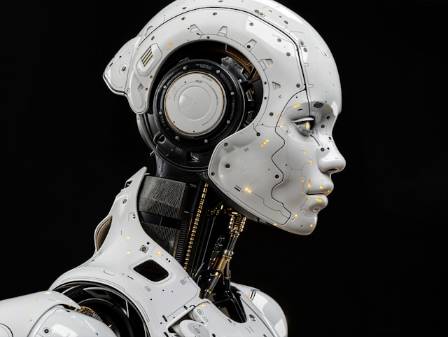
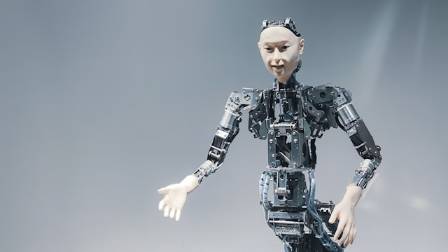
A humanoid robot is a machine designed in the form of a human body, built to imitate human movement and function. As advanced service robots, they are intended to work alongside people and improve productivity across many environments.
Driven by artificial intelligence, these robots can perceive surroundings, interpret information, make decisions, and execute complex tasks independently. With rapid improvements in machine learning, their adaptability is increasing at an unprecedented pace.
Experts predict that humanoid robots could become part of everyday life within the next decade. Some forecasts suggest that by 2040, billions of units may be operating worldwide, extending far beyond factory floors into healthcare, retail, maintenance, and personal assistance roles.
Financial projections also reflect this momentum. One estimate suggests the market could reach tens of billions of dollars by the mid-2030s, with annual growth rates approaching 50% in the early 2030s.
Technology foundation and supply chain
The capabilities of humanoid robots rely on a complex technological ecosystem. This includes semiconductors, artificial intelligence systems, actuators that convert energy into motion, and sensor networks that enable perception.
Because they require large amounts of high-performance computing power for motion control and decision-making, demand for advanced chips is expected to surge alongside industry growth.
At the same time, breakthroughs in AI have pushed humanoid robots from research laboratories into commercial deployment. Companies such as Tesla, Figure AI, and Unitree are accelerating development and moving toward large-scale production, bringing once-futuristic ideas closer to reality.
Workforce impact: challenge and opportunity
The expansion of humanoid robots presents both disruption and opportunity for the global workforce. On one hand, there are concerns about job displacement and overdependence on automation. On the other, these machines can take over dangerous or repetitive tasks, improving workplace safety and allowing humans to focus on more meaningful work.
New job categories are also expected to emerge, including robot supervision, maintenance, training, and human-robot collaboration roles. In this way, humans remain central to the evolving workforce rather than being replaced entirely.
Industries may also benefit from improved service quality and efficiency, especially when robots enhance rather than replace human capabilities.
Global competition accelerates
Progress in generative AI has significantly accelerated humanoid robotics development. Today, the United States and China lead much of this innovation, dominating both AI research and robotics manufacturing.
Data from AI research indexes shows that the majority of advanced AI models and intellectual property originate from these two countries. This includes neural networks, large language models, reinforcement learning systems, and sensor technologies used in robotics.
China in particular has rapidly expanded its presence in this field. Forecasts suggest strong growth in its humanoid robotics market, supported by government policy, strong infrastructure, and a large number of patents filed in recent years.
Demonstrations such as marathon-running robots indicate not only participation but also leadership in pushing the boundaries of robotics performance.
Future applications across society
Humanoid robots are expected to play a major role in reshaping labor across multiple industries. In high-risk environments such as manufacturing, mining, and disaster response, they can reduce human exposure to danger and lower injury rates.
In service sectors such as elder care, retail, and customer service, they may help address labor shortages while offering personalized assistance. This is particularly relevant in aging societies such as Japan, Germany, South Korea, and China, where workforce decline is becoming a serious issue.
Future systems may also achieve interoperability across different manufacturers, allowing robots to operate within shared digital ecosystems and coordinated networks.
Large-scale deployments already provide a preview of this future. For example, major logistics networks are using hundreds of thousands of robots working in coordinated systems to support warehousing and delivery operations. Experiments with humanoid robots in last-mile delivery are also underway, testing how machines can operate alongside humans in real-world environments.
Risks and regulatory challenges
Despite the promise, several challenges remain. These include privacy concerns, system reliability, cybersecurity risks, job displacement, and broader economic disruption.
Since humanoid robots can operate autonomously in human spaces, safety and ethical concerns become especially important. Their behavior must align with social expectations and avoid unpredictable or harmful actions, particularly in homes and public environments.
To ensure safe deployment, multiple layers of oversight are required. Engineers must design technical safeguards, companies must implement operational safety systems, and governments must establish regulatory frameworks. In addition, users will need training to interact safely and effectively with these machines.
Conclusion
Humanoid robots are no longer a distant vision of the future—they are already entering real-world environments and reshaping industries. Their influence will likely expand across manufacturing, healthcare, logistics, and daily life.
Rather than replacing humans, the most likely outcome is collaboration, where robots extend human capability and improve efficiency, safety, and productivity.
As this technology continues to evolve, society faces both a challenge and an opportunity: to build systems that ensure humanoid robots are developed responsibly while maximizing their potential to improve human life.