They Possess Extraordinary Memory
Elephants have the largest brains of any land mammal, which supports their legendary memory. They can remember distant water sources, migration routes, and individual humans or elephants over many years. This knowledge is passed down through matriarchs, helping herds survive in changing environments.
They Can Distinguish Human Languages
Research shows elephants can differentiate between human languages and even identify potential threats. When hearing voices of groups known to harm them, elephants become defensive—tightening their formation and investigating the air. They also react more strongly to adult male voices than to those of women or children.
They "Hear" Through Their Feet

Elephants communicate using low-frequency rumbles that travel through the ground as seismic vibrations. Specialized ear bones and sensitive nerve endings in their feet and trunks allow them to detect these signals over long distances, helping them stay connected and warn each other of danger.
They Are Strong Swimmers
Elephants are surprisingly adept swimmers. They use their trunks as natural snorkels and paddle with their powerful legs. This ability allows them to cross rivers and lakes in search of food and new habitats.
They Show Empathy and Altruism
Elephants display clear signs of compassion. They have been observed comforting distressed herd members with gentle touches and vocalizations. They also cooperate to assist sick or injured individuals—a level of empathetic behavior seen in only a few other species.
They Can Experience PTSD
Elephants suffer lasting psychological trauma from violence or loss. Calves orphaned by poaching often show symptoms akin to post-traumatic stress disorder, and elephants rescued from abuse may carry emotional scars for years. Such trauma can also impair their ability to learn and socialize.
Elders Are Vital to Their Survival
Knowledge is passed from older elephants to the young, especially in matriarch-led African herds. Elder elephants teach crucial skills like finding food and water, recognizing threats, and navigating migration routes. In Asian elephants, social structures are less hierarchical, reflecting different ecological pressures.
Their Trunks Are Incredibly Skilled
An elephant’s trunk contains over 40,000 muscles and functions like a multi-tool. It can lift heavy logs or pluck a single blade of grass. African elephants have two finger-like tips, while Asian elephants have one. Trunks are used for smelling, breathing, drinking, touching, and communicating.
Their Closest Relative Is Surprisingly Small
The elephant’s closest living relative is the rock hyrax—a small, furry mammal native to Africa and the Middle East. Despite vast differences in size, they share traits like tusks growing from incisor teeth and similar reproductive structures. Manatees and dugongs are also distant relatives.
They Mourn Their Dead
Elephants show profound interest in deceased companions, often touching bones or standing vigil. They have been observed revisiting burial sites and appearing visibly stressed—with temporal glands secreting fluid—suggesting a complex emotional response to death.
They Use Dirt as Sunscreen
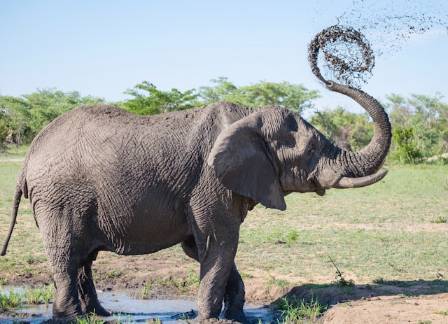
Elephants have sensitive skin that can burn easily. To protect themselves, they regularly coat their bodies with dust, sand, or mud after bathing. This also helps keep them cool and repels insects.
Some Have Math Skills
Certain Asian elephants demonstrate basic numerical understanding. In experiments, they have successfully identified the larger of two quantities, suggesting an ability to differentiate amounts—a cognitive trait less observed in African elephant species.
All Species Are at Risk
Elephants face severe threats: habitat loss, human-wildlife conflict, and poaching for ivory and other body parts. Asian elephants are endangered, African savanna elephants are endangered, and African forest elephants are critically endangered. Conservation efforts focus on habitat protection, anti-poaching measures, and community coexistence programs.