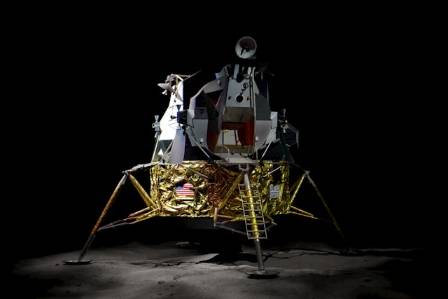
As the world celebrates the success of the Artemis II mission and anticipates future milestones—including another moon landing, a permanent lunar base, and eventual journeys to Mars—some voices remain skeptical.
Among them are Martin Rees, the Astronomer Royal and former president of the Royal Society, and Donald Goldsmith, an astrophysicist and science communicator. Writing for the UK’s Guardian, both have expressed reservations about the value of human spaceflight.
Rees and Goldsmith acknowledge the benefits of sending humans into space, yet they argue that the costs are excessively high and the risks enormous. They suggest that advancements in AI, robotics, and electronic systems make it possible to explore—and even utilize—other celestial bodies like the Moon or Mars without putting humans in danger.
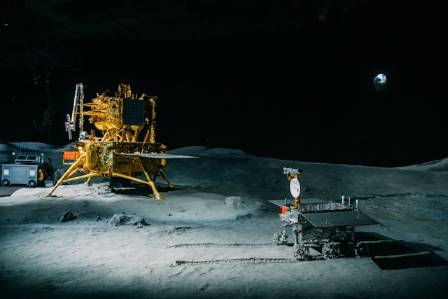
In their vision, a lunar outpost dedicated to science and commerce would not need astronauts on-site. Instead, AI and robots—think of a mix of HAL 9000, C-3PO, R2-D2, and perhaps a few Commander Datas—would perform tasks ranging from mining operations to maintaining a far-side radio observatory.
Ironically, the very fear that AI and robotics might replace humans on Earth is, in their eyes, a hopeful scenario for space exploration. The reality, however, is that these technologies are not designed to replace humans but to enhance our ability to achieve meaningful work.
According to the Harvard Business Review, AI may eliminate certain roles, but it also creates new opportunities focused on AI-human collaboration. By automating repetitive tasks, AI allows humans to concentrate on creative problem-solving and complex decision-making.
CNBC emphasizes that robots will assume menial, repetitive jobs—such as lawn maintenance, household chores, and factory labor—but humans will remain essential in overseeing these robot teams. AI excels at pattern recognition and optimization, while humans bring creativity, emotional intelligence, and judgment to the table.
What does this mean for a lunar base? An AI-driven hub on the Moon could manage multiple functions: controlling robotic rovers to survey terrain and locate resources, processing sensor data and imagery on-site before sending it to Earth, maintaining critical systems like life support, predicting equipment malfunctions, and monitoring astronauts’ health and safety—including tracking incoming space debris.
Meanwhile, robots would perform labor-intensive tasks that don’t require human insight. Exploration teams might include humanoid robots working alongside astronauts. Freed from the burden of facility maintenance, humans could focus on scientific investigation, resource exploration, and discovery.
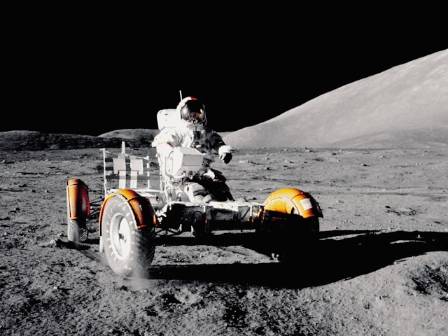
The late Dr. Paul Spudis highlighted in The Value of the Moon that trained geologists possess an intuitive ability to interpret sites in ways no machine can replicate. Human presence is also crucial for inspiration: astronauts convey the awe of space exploration to the public in ways robots cannot. For instance, the Artemis II crew’s descriptions of orbiting the Moon communicated wonder and excitement that resonated globally.
Rees and Goldsmith argue that human missions are too expensive and risky, yet they dismiss private space entrepreneurs like Elon Musk, Jeff Bezos, and Peter Beck with a brief, sarcastic remark. These innovators have dramatically lowered the cost of access to space, and competition will likely continue to drive prices down further.
Space exploration, by its nature, carries risks. Lives will be lost, and tragedies will occur. Yet the astronaut profession remains one of the most coveted on Earth because the rewards—advancing knowledge, inspiring humanity, and pushing frontiers—are profound.
Progress often comes at a cost, sometimes tragically high. But retreating into comfort and safety is not a viable path. To avoid stagnation, decline, and eventual decay, humanity must continue to venture into the unknown.