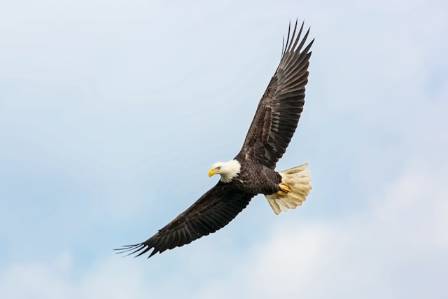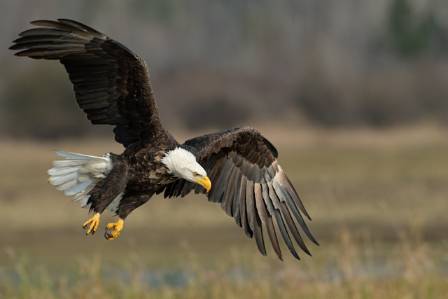
Eagles—just the name brings to mind strength, freedom, and razor-sharp vision. These impressive birds of prey dominate the skies across much of the world, inspiring awe with their hunting skill and commanding presence. This guide explores the fascinating world of eagles, covering their biology, behavior, ecological importance, and cultural meaning.
What Is an Eagle?
Eagles are large, robust raptors that belong to the family Accipitridae. They are known for their powerful talons, hooked beaks, and exceptional eyesight. The term “eagle” does not describe a single scientific group but is commonly applied to several genera such as Aquila, Haliaeetus, and Circaetus, which share similar traits and ecological roles. There are more than 60 eagle species worldwide, varying widely in appearance, size, and habitat.
Physical Features
Although sizes differ, eagles share several defining characteristics. Their wingspans typically range from about five feet to over eight feet, allowing them to glide effortlessly on air currents. Body weight can vary from just a few pounds to more than 20 pounds in larger species. Their feathers are often dark brown or black, sometimes accented with white heads or tails. Their most remarkable feature is their vision—estimated to be four to eight times sharper than that of humans—enabling them to detect prey from great distances. Their strong talons are perfectly designed for grasping and carrying prey.
Habitat and Distribution
Eagles are found across a wide geographic range, including North America, Europe, Asia, Africa, and Australia. They thrive in diverse environments such as forests, mountains, deserts, grasslands, and coastal regions. Their habitat choice depends largely on food availability and species preference.
For instance, Bald Eagles are commonly seen near large lakes and rivers where fish are plentiful. Golden Eagles prefer open landscapes and mountainous regions, ideal for soaring and hunting mammals. Harpy Eagles inhabit dense tropical rainforests, building large nests high in the canopy.
Diet and Hunting Behavior
As carnivores, eagles feed on fish, mammals, birds, and reptiles. Their diet varies depending on their environment, and some species will also scavenge when the opportunity arises.
Eagles use a variety of hunting techniques. Many soar high above the ground, scanning for movement before diving swiftly to capture prey with precision. Others hunt from hidden perches or steal food from other predators. Fish-eating species often snatch prey directly from the water’s surface, while some, like the Steppe Eagle, specialize in chasing small animals across open terrain.
Reproduction and Life Cycle
Most eagles form long-term pair bonds and often mate for life, returning to the same nesting site each year. Breeding seasons vary depending on location and species.
They build large nests, known as eyries, in trees, on cliffs, or sometimes on man-made structures. These nests can grow extremely large and heavy over time. Females usually lay one to three eggs, which are incubated for about 35 to 45 days. The chicks hatch helpless and depend heavily on their parents. After eight to twelve weeks, they begin to leave the nest, though they continue to rely on adult care for several months. Full maturity takes several years.
Role in Ecosystems
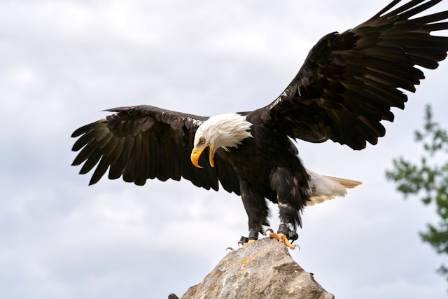
Eagles are apex predators and play a key role in maintaining ecological balance. By controlling prey populations, they help prevent overpopulation and support biodiversity. They also contribute to nutrient cycles through their feeding habits.
Their presence often reflects the health of an ecosystem. A decline in eagle populations can indicate environmental issues such as pollution, habitat destruction, or reduced prey availability. Eagles also interact with other species, competing with fellow predators and occasionally facing threats from large carnivores.
Cultural Significance
Throughout history, eagles have symbolized power, bravery, and freedom. They appear in myths, art, and national symbols across many cultures. In Native American traditions, eagles are sacred and associated with spiritual strength. The Bald Eagle serves as the national emblem of the United States, while ancient Rome used the eagle as a symbol of military power.
Human Interaction and Conservation
In the past, eagles were often hunted due to fears they threatened livestock or simply for sport. Habitat destruction and pesticide use, particularly DDT, also caused severe population declines.
Conservation measures, including banning harmful chemicals and protecting habitats, have helped many eagle species recover. However, threats remain, such as habitat loss, collisions with infrastructure, and illegal hunting. Continued protection efforts are crucial. Observers are encouraged to watch eagles from a distance and avoid disturbing nesting areas.
Further Insights for Enthusiasts
Evolutionary Background
Eagles evolved from early members of the Accipitridae family during the Eocene epoch, roughly 56 to 34 million years ago. These early raptors were likely smaller and lived in forests. Over millions of years, they diversified into the wide variety of species seen today. Ongoing research continues to refine our understanding of their evolutionary relationships.
Species Identification
Identifying eagle species requires attention to details such as size, feather patterns, wing shape, calls, and behavior. For example, the Harpy Eagle is recognized by its large size and crest, the Philippine Eagle by its long feathers and pale eyes, and the Golden Eagle by its golden-brown neck.
Care in Captivity
Caring for eagles in captivity demands expertise and resources. They require large enclosures for flight, a diet that closely matches natural prey, and enrichment to encourage natural behaviors like hunting. Veterinary care and a stress-free environment are essential for their well-being.
Conclusion
Eagles are extraordinary birds that represent strength, elegance, and endurance. Their role in nature is essential, and their symbolic importance is deeply rooted in human culture. By continuing to protect and study these remarkable raptors, we can ensure they remain a powerful presence in the skies for generations to come.