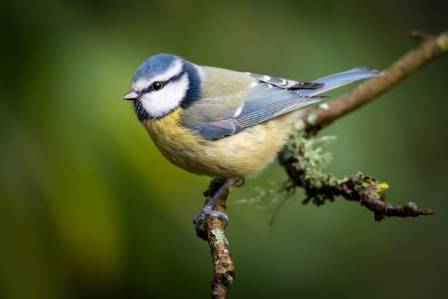
The Blue Tit, belonging to the tit family, holds a "Green" conservation status in the United Kingdom, indicating a healthy and stable population.
Identification and Characteristics
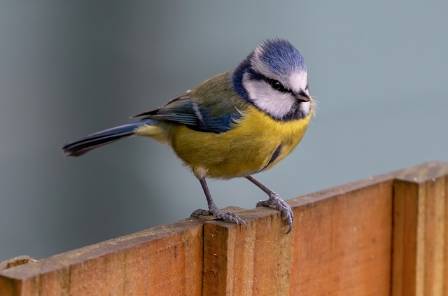
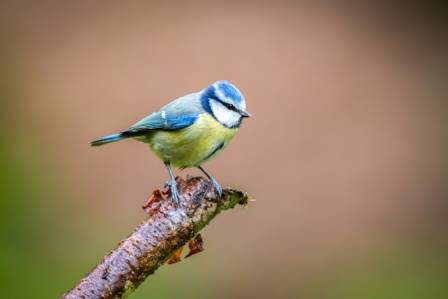
With its vibrant palette of blue, yellow, white, and emerald green, the Blue Tit stands out as one of the most delightful and easily spotted birds in British gardens. During the colder months, family groups often merge with other tit species to forage for sustenance. If you observe four or five individuals at a garden station simultaneously, it is likely that a total population of twenty or more is utilizing that food source. Key physical markers include a multi-colored plumage of green, blue, yellow, and white, alongside a notably slender and petite black bill designed specifically for cracking open nuts and seeds.
Habitat and Geographical Range
These birds are frequently encountered in various environments, including leafy woodlands, garden spaces, public parks, and rural hedgerows. They are a common sight across almost the entire United Kingdom, though they are generally absent from several islands in Scotland. As permanent residents, they can be seen throughout every month of the year, from January to December.
Behavioral Traits and Vocalizations
Blue Tits are known for their bold nature, often remaining perched on feeders long after other species have been startled away. They are playful and frequently pursue one another through gardens. Historically, they gained fame for their clever ability to pierce the foil caps of milk bottles to consume the cream at the top. Their song consists of a brief, trilling melody that is often delivered in rapid succession. Typically, this starts with high-pitched "tseep" notes and concludes with a lower, vibrating rattle.
Audio Patterns and Seasonal Presence
Vocal activity occurs throughout the year. During the spring and summer, their songs are used for territorial defense and to entice potential mates. In the winter, they join mixed-species groups and use contact calls to stay aligned with the flock. While slightly more reserved than some of their larger cousins, they remain a constant presence at feeding stations during the winter. They are audible throughout the UK, except for those specific Scottish islands where they only appear occasionally following significant storm events.
Breeding and Nesting Habits
This species is notable for producing exceptionally large clutches, sometimes reaching up to 16 eggs. They only raise one brood per year, carefully timing the hatching to coincide with the peak availability of caterpillars. The female takes the lead in nest construction with minimal help from the male, usually selecting a site close to trees to ensure a steady supply of food for her demanding offspring.
Essential Statistics and Data
The Blue Tit has a green conservation rating and a diverse diet consisting of nuts, seeds, caterpillars, and various insects. In Europe, the population is estimated between 20 and 44 million pairs. Physically, they measure approximately 12cm in length, with a wingspan of 18cm and a weight of about 11g. Their feathers display a mix of yellow, white, black, blue, green, and grey, while their legs appear blue or grey. In the UK, there are roughly 3,600,000 breeding territories, with the winter population swelling to approximately 15 million individual birds. They occupy habitats ranging from agricultural farmland and suburban areas to dense woodlands.
Would you like me to find some specific tips on the best types of nest boxes and hole sizes to attract Blue Tits to your backyard?