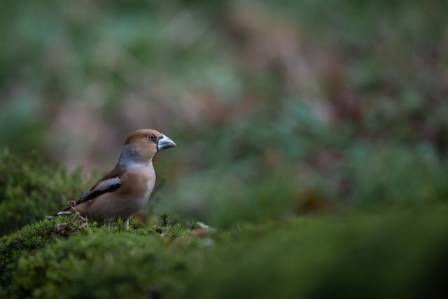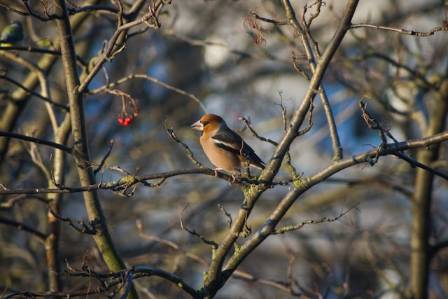
The hawfinch (Coccothraustes coccothraustes) stands out as one of the most robust members of the European finch family. Its most defining characteristic is an exceptionally strong beak and muscular jaw structure, which provide the mechanical force necessary to fracture hard seeds and fruit stones that remain inaccessible to most other bird species. This specialized physical trait is reflected in its ancient Greek designation, which translates to "nut-breaker."
Physical Appearance and Identifying Features
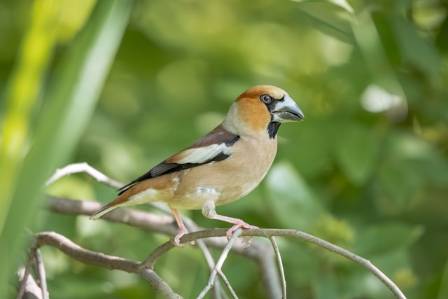
As a prominent member of the Carduelinae subfamily, the hawfinch is characterized by its substantial size and striking coloration. These birds typically reach a length of seven inches (18 centimeters) and can weigh up to 2.5 ounces (70 grams). Males possess a rich, reddish-brown plumage on their heads and upper bodies, complemented by a distinct black patch around the bill and chin. Their wings, which span between 11 and 13 inches, feature a sophisticated mix of gray, black, and white feathers that contrast with the softer pink tones of their underparts. While females share a similar color palette, their feathers are notably paler and more muted.
The bird's most formidable tool is its large, conical bill—ranging in color from gray to yellow—which is equipped with internal horn-like pads. This biological design allows the hawfinch to exert enough pressure to split open the incredibly tough pits of cherries, plums, and olives to reach the nutrient-rich kernels inside.
Habitat, Diet, and Behavioral Patterns
Hawfinches are adaptable to various environments, residing in both low-lying lands and mountainous terrain. They frequent deciduous and mixed woodlands, orchards, grasslands, and suburban areas with mature trees. Orchards are particularly favored due to the abundance of fruit pits, though they also consume beech mast, hornbeam seeds, hawthorn, and maple seeds. During the warmer months, they supplement this diet with insects and buds.
Despite their size and distinctive "ptik" calls—which resemble those of a robin—hawfinches are famously elusive. They are shy creatures that spend much of their time high in the canopy, making them more often heard than seen. While they are primarily active during the day and roost at night, they generally do not migrate, preferring to stay in their established territories year-round.
Reproduction and Social Dynamics
The breeding season begins in early spring, typically spanning from April to June. Hawfinch pairs are known for their collaborative nesting habits, often returning to the same successful sites in forests or gardens year after year. They construct shallow, cup-shaped nests using a mixture of twigs, moss, and roots, lining the interior with finer grasses or animal hair. These nests are usually positioned on horizontal branches at heights ranging from five to 35 feet.
The female typically produces a clutch of four to five eggs, which she incubates for approximately 11 to 13 days. During this period, the male assumes the responsibility of providing her with food. Once the chicks hatch, both parents share the duty of feeding them for about two weeks. By the onset of winter, these young birds are fully independent and ready to integrate into larger flocks.
Predation and Conservation Status
In the wild, hawfinches face threats from various predators, including goshawks, sparrowhawks, jays, and squirrels, which frequently target the more vulnerable juveniles. Under favorable environmental conditions, a hawfinch can reach an age of approximately four years. Currently, the species maintains a stable population and is not classified as threatened, largely due to its ability to exploit food sources that other birds cannot utilize.