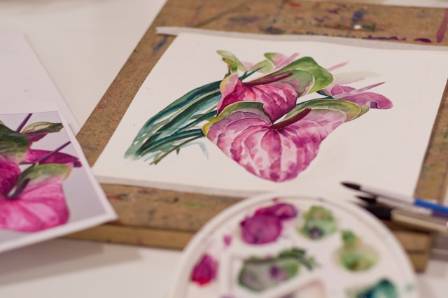
This lesson will guide you through creating a watercolor hibiscus flower, resulting in the artwork shown above. The painting is done on a half sheet of high-quality watercolor paper. To begin, I sketch the flower lightly with a graphite pencil directly on the paper. The hibiscus design is simple yet elegant. While hibiscus flowers appear in a variety of colors, I’ve chosen red, the most common shade, though there are roughly 200 different species.
The flower itself is trumpet-shaped, fairly large at about five inches in length, with prominent pistils and a substantial stamen. Hibiscus plants thrive in warm, tropical regions. Their blooms are widely appreciated for decorative purposes, culinary uses, and medicinal properties. One of the aspects I enjoy most is that the plant flowers almost year-round. Individual blooms only last a day, but the plant produces new flowers daily, keeping it vibrant and appealing. Symbolically, the hibiscus represents feminine energy, beauty, and charm. Red hibiscus flowers, in particular, convey passion, love, and romance.
Painting the Flower Petals
I paint the hibiscus petals one at a time using the alla prima wet-into-wet technique. First, I lightly moisten the area of the paper where the petal will go, using a very diluted red wash. While the surface is still damp, I apply more concentrated red pigment. The edges of the petal remain crisp, while the brushstrokes inside diffuse naturally on the wet paper.
I intentionally leave some white spaces between strokes to suggest texture and highlights. Gradually, I layer more red to deepen the tonal range and add dimension. For darker shadows, I incorporate small amounts of blue, which provides contrast in both value and temperature. Additional lighter blue touches are applied selectively for subtle variation. Once a petal is complete, I allow it to dry before moving on.
Adding Additional Petals
Subsequent petals are painted in the same wet-into-wet manner. I apply a base layer of light red and then add richer reds along with touches of blue to convey the petal’s depth and texture. To save time, I sometimes use masking fluid, applying small dots with the brush handle. These areas remain protected, making it easy to retain highlights and clean brush strokes.
When choosing red pigments, the key is not the name of the paint but rather the combination of warmer and cooler tones—from yellows and oranges to reds and purples. Even a single pigment can produce a realistic flower if tonal values are correct. Using two or three red pigments is often enough to achieve a vibrant, believable effect.
Enhancing Tonal Depth
To reinforce the contrast and dimensionality, I add blue and violet in shadowed areas. These darker hues make the red petals appear more vivid. Small details are applied with a fine round brush to preserve delicacy and freshness. I avoid overworking the painting, allowing the surface to remain lively. After drying, I remove the masking fluid and add tiny yellow highlights to complete the flower.
Painting the Leaves
Next, I turn to the green foliage. A critical tip for painting leaves is to mix your own greens using yellow and blue pigments instead of relying on pre-mixed green paints. While store-bought greens can be convenient, they often appear too flat or unnatural for realistic foliage.
Mixing yellow and blue allows for a range of green shades, from warm tints to cooler tones. You can either mix on the palette or apply colors directly to the paper, letting them blend naturally. This method produces more nuanced greens that harmonize with the red flower and avoid overpowering it.
Capturing Realistic Leaf Colors
Leaves are rarely a single, flat green—they contain a spectrum of colors, from yellows and oranges to blues and violets. As an artist, you have creative freedom to represent this range. Even a single leaf may contain multiple colors layered subtly.
The goal is not merely to match a color, but to convey tonal contrast and warm/cool relationships. Light and shadow, as well as temperature contrasts, create depth and realism.
Initially, I painted the leaves wet-on-dry for sharper edges. I then switch to wet-into-wet to create softer, blended transitions. Using aerial perspective, background leaves are lighter and more diffused, while foreground leaves have stronger contrast. This approach enhances the illusion of depth and spatial relationships within the composition.
Final Thoughts
By carefully layering pigments, managing tonal values, and using subtle color mixtures, you can achieve a realistic, vibrant watercolor hibiscus. The key is balancing detail with freshness and using your pigments thoughtfully to convey both form and depth. With practice, these techniques can be applied to any floral subject, allowing you to create lifelike and expressive watercolor artwork.