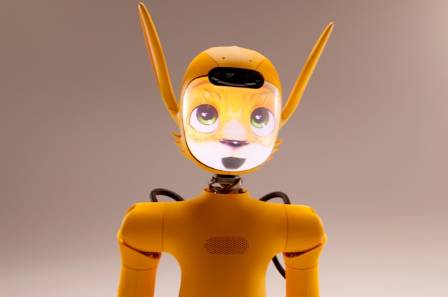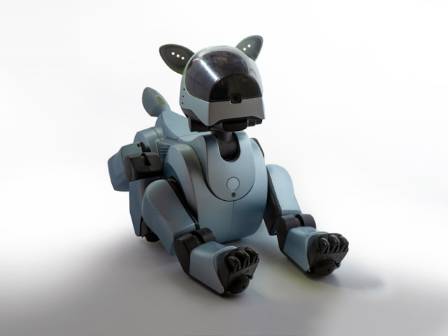
Humanity has shared a profound connection with animals since the earliest days of civilization. Evidence suggests that dogs were domesticated as many as 30,000 years ago, marking the beginning of a long history of interspecies bonding. However, the concept of engineering our own companions is a relatively modern phenomenon.
The timeline of robotic pets is a rapid journey from rudimentary mechanical curiosities to highly intelligent, lifelike systems. This transition reflects significant leaps in engineering, software development, and our understanding of human-robot interaction.
Pivotal Milestones in Robotic Pet History
The lineage of modern digital and mechanical companions can be traced back to a handful of groundbreaking inventions that redefined what a "pet" could be.
The Phony Pony (1968)
Developed at the University of Southern California, the Phony Pony was a monumental achievement in early robotics. It stands as the first autonomous quadrupedal machine, serving as the technical precursor to every robotic dog and cat produced today. Though it lacked wireless capabilities and moved at modest speeds, its four-legged frame—complete with individual hip and knee joints—proved that mechanical walking was a viable reality.
The Tamagotchi and Furby (1990s)
The 1990s introduced the world to the emotional potential of digital life. Released in 1996 by Bandai, the Tamagotchi was a handheld virtual pet that required constant nourishment and attention. Its massive success, with over 80 million units sold, demonstrated that humans could form deep emotional attachments to a simple collection of pixels. Soon after, the Furby brought this concept into the physical world. While basic in function, these domestic robots offered a sense of "living" presence that captivated millions of households globally.
Industrial and Academic Innovation: BigDog and PLEO
In 2005, Boston Dynamics introduced BigDog, a robust quadruped designed for military logistics. Capable of carrying 154 kg across treacherous terrain, it showcased the physical prowess of modern robotics, even if its loud engine eventually limited its combat application. Conversely, PLEO represented a shift toward emotional intelligence. Built by UGOBE, this robotic dinosaur utilized research in sociology and philosophy to simulate lifelike behaviors and responses, creating an uncanny sense of organic life through its complex operating system.
The ANYmal Inspection Dog
The evolution of these systems eventually led to highly functional industrial tools like the ANYmal. Developed by ANYbotics, this robotic dog is designed to navigate hazardous industrial sites autonomously. Equipped with laser sensors and advanced data-sharing capabilities, it performs safety inspections in environments too dangerous for humans or biological animals, proving that the robotic pet form factor has vital utility in the modern workforce.
Designing Your Own Autonomous Companion
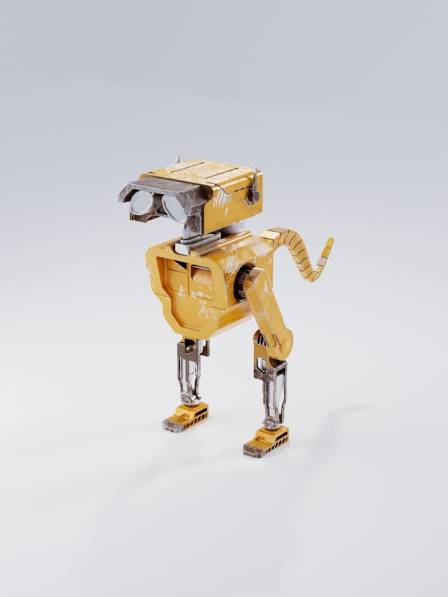
The democratization of technology now allows enthusiasts to create their own digital or mechanical friends using accessible hardware like the Arduino platform. Many creators are moving beyond commercial products to build customized companions that reflect their own technical interests.
One creative example is "The Nerd," an electronic pet inspired by the Tamagotchi era. Unlike traditional pets, this device "consumes" WiFi signals to survive and requires specific levels of sunlight. It communicates its needs through Morse code and serves as an excellent introductory project for those interested in the Internet of Things (IoT). By combining an Arduino board with light sensors and buzzers, makers can simulate the responsibilities of pet ownership through a digital lens.
Another notable community project is "Roger Bot," a home-built companion featuring a functional robotic arm and an integrated LCD screen for displaying sensor data. While currently optimized for flat surfaces, it represents the growing trend of "domesticated" hobbyist robotics where users can iterate on designs to improve navigation and interactivity.
The Future of Robotic Companionship
As artificial intelligence and sensor technology continue to mature, the gap between biological pets and their mechanical counterparts is narrowing. For those interested in joining this field, the combination of modular hardware and cloud-based development tools provides a clear path to innovation.
Creating a robotic companion is no longer reserved for high-budget research labs; it is an accessible way to explore the boundaries of technology while gaining a loyal, programmable friend. With the current trajectory of AI, a truly autonomous and emotionally responsive robotic pet may soon become a standard feature of the modern home.