Human curiosity about life beyond Earth stretches back centuries. As soon as we understood that planets like Mars were distinct from the stars in the sky, speculation about beings from elsewhere began. Even now, despite our powerful technology — including robotic probes and observatories — we lack definitive proof of organisms beyond our world.
However, an absence of confirmation doesn’t equate to ignorance. With every discovery across the Cosmos — from frozen moons to far-off planetary systems — our expectation grows stronger: that life, in some form, exists elsewhere.
Many individuals are convinced that extraterrestrial creatures exist, often influenced by cinema or mysterious aerial reports. But scientific approaches offer logical reasons to think we’re not the sole life-bearing planet. Through analysis and data, science explores key possibilities of what types of entities might dwell beyond Earth.
How Probable Is Extraterrestrial Life?
A more focused question than “Are aliens real?” might be: is it plausible that Earth is the only inhabited body across the entire Universe?
The observable portion of the Cosmos likely contains upwards of two trillion galaxies. Within our own Milky Way, astronomers estimate at least 100 billion suns. As exoplanet surveys progress, it appears most stars host orbiting worlds. Additionally, several satellites in our Solar System, such as those orbiting Jupiter and Saturn, exhibit conditions that could potentially support biology.
When considering all possibilities — roughly 20 sextillion planets and moons — it becomes increasingly unlikely that our planet is unique in fostering living systems. Statistically, it would be remarkable if Earth stood entirely alone.

What Does “Alien” Really Mean?
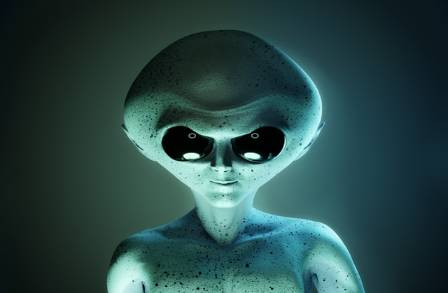
To the average person, “alien” might evoke images of humanoid figures or green beings. In scientific terms, however, the life we’re most likely to detect is microscopic — resembling bacteria more than anything else.
For the majority of Earth's biological history — nearly three billion years — all living organisms were single-celled. These microbes were essential in producing atmospheric oxygen before any greenery emerged. Today, such simple organisms flourish in extreme settings: deep ocean vents, acidic lakes, and polar ice. Due to their durability and adaptability, they remain the most probable form of alien life we might uncover.
You won’t spot these minuscule entities with a telescope. Instead, scientists search for biosignatures — indirect evidence of metabolism or growth — such as specific gases or chemical imbalances in atmospheres.
Possible Habitats for Life
There might be living creatures within our very own planetary system. Mars, once warm and aquatic, could have supported — or might still host — microbial communities. Icy moons such as Europa or Enceladus conceal subsurface oceans that might provide suitable environments.
Outside our system, planets orbiting distant stars — called exoplanets — are prime targets. Scientists examine their chemical compositions for signs of activity and, perhaps one day, intelligent transmissions.
Could There Be Advanced Civilizations?
Given the staggering number of worlds, it's unlikely Earth is the only cradle of intelligent life.
However, technological civilizations — those capable of emitting detectable signals — may be exceedingly rare or widely dispersed. For the majority of our existence, Earth gave no clues to the outside Universe that it harbored intelligence. Only recently, through radio broadcasts and electronic communication, has humanity begun emitting signs detectable from space.
Researchers in SETI (Search for Extraterrestrial Intelligence) monitor for intentional broadcasts — such as radio waves or laser pulses — and other potential indicators like industrial chemicals or artificial illumination on a planet’s dark side.
Still, we’ve received nothing definitive. This conundrum is part of the Fermi Paradox, named after physicist Enrico Fermi, which questions why, amid such enormous odds, no alien civilizations have made contact. The paradox suggests that advanced beings may be extraordinarily uncommon — or simply too remote for us to detect with present-day equipment.
Are UAPs Evidence of Visitors?
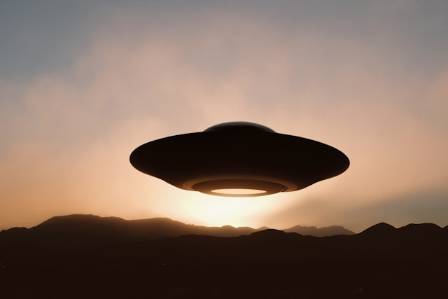
Unidentified Aerial Phenomena (UAPs), previously known as UFOs, have intrigued and puzzled the public for decades. While many interpret these sightings as evidence of alien visitation, no scientifically validated proof has ever been uncovered.
By their very nature, UAPs are unexplained — not inherently extraterrestrial. They could result from unfamiliar aircraft, natural phenomena, or perception errors. While some government investigations have kept the topic in the public eye, no official inquiry has concluded that these incidents involve beings from another planet. Psychological and cultural explanations often provide better clarity on why so many people report such encounters.
The Search Continues
Although definitive evidence remains elusive, the immense scale of the Universe points toward a high chance that life — perhaps even advanced life — exists elsewhere.
Each interplanetary mission, telescope observation, and signal scan brings us closer to understanding our place in the Universe. Whether we eventually confirm the presence of alien life or not, the pursuit itself is a profound part of human exploration — reminding us that, in the boundless vastness of space, we are likely not alone.