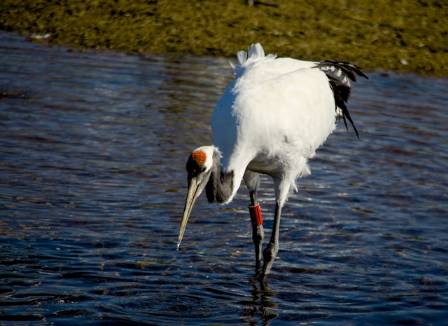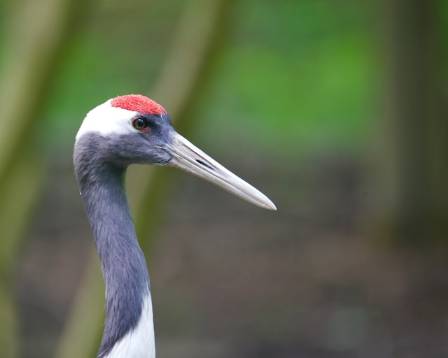
The red-crowned crane has long been revered as a representation of eternal life. Scientifically identified as Grus japonensis, this bird is also frequently referred to as the "Japanese crane," though it holds significant cultural importance across China, Russia, Mongolia, and the Korean peninsula. Its name is derived from the distinct patch of crimson skin on its forehead. These birds primarily thrive in expansive, undisturbed wetlands where they can hunt for sustenance.
Physical Characteristics
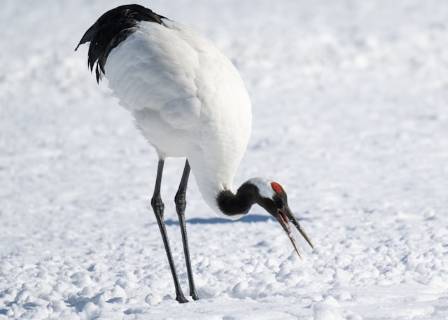
Beyond their signature red crowns, these cranes typically display snow-white plumage accented by black feathers on their wings. Juveniles are also white but often feature mottled patches of gray or brown. They possess sharp, dark green bills that are perfectly adapted for spearing prey. Standing roughly five feet tall with a wingspan reaching up to eight feet, they are among the largest crane species on the planet. Generally, males are slightly larger than their female counterparts.
Natural Environment and Diet
As semiaquatic creatures, red-crowned cranes settle in regions with abundant water sources. They follow an omnivorous diet, hunting small rodents and amphibians or catching fish, while also consuming marsh vegetation like reeds. While they are frequently linked to chilly environments—specifically the wetlands spanning East Asia and Russia—they prefer areas with relatively temperate conditions. Some populations also reside in the significantly warmer regions of Southeast Asia.
Social Behavior and Mating
These birds are famously monogamous, typically choosing a single partner for the duration of their lives. This lifelong commitment has made them a symbol of fidelity in many cultures. To reinforce their partnership, couples engage in "unison calling," using their long windpipes to produce synchronized vocalizations. Their courtship involves elaborate "dances," characterized by graceful leaps into the air or rhythmic, ball-like bouncing.
Red-crowned cranes are highly social and active. They utilize their vocalizations and dances not just for courtship, but also for play or to signal warnings to others. While they may spend their daylight hours alone or in small pairs, they usually gather in larger colonies or flocks at night to roost.
Risks to the Species
Currently, the red-crowned crane is the second-rarest crane species globally, trailing only the North American whooping crane. It is officially classified as endangered, with a global population of only about 1,830 mature individuals—a number that continues to decline. The primary driver of this crisis is the loss of habitat; the specific wetlands required for their breeding are disappearing or becoming too fragmented to support the population.
Human interference and environmental shifts are the main causes of this decline. For example, Lake Poyang in China, once a vital sanctuary for these birds, has suffered significant shrinkage due to sand mining and the impact of the Three Gorges Dam on water levels. Additionally, shifting climate patterns and reduced rainfall have led to increased aridity in traditional breeding grounds. In Russia and China, spring wildfires further degrade the environment. Even in the Demilitarized Zone between the Koreas—a makeshift wildlife haven—modernized farming techniques are reducing the availability of leftover grain that the cranes rely on for food.
Preservation Initiatives
International organizations, such as the International Crane Foundation, are leading global movements to protect the species. In every country where they reside, red-crowned cranes are legally shielded from hunting.
One of the most successful recovery stories is found in Hokkaido, Japan. This specific colony does not migrate and relies on local supplemental feeding stations. Thanks to protective environmental policies in Japan, this population is showing a gradual increase. For migratory groups in other parts of Asia, several new sanctuaries have been proposed. Furthermore, initiatives like the DMZ Forum are working to encourage traditional, eco-friendly farming practices in Korea to ensure the cranes have continued access to food. Other vital strategies include stricter legal protections, wetland restoration, and better management of spring fires to ensure these culturally vital birds do not vanish.