Cai Qin, vice director of the Zhejiang Provincial Museum, recently delivered a series of talks in Hangzhou, Tianjin, Suzhou, and Ningbo, discussing how women were depicted in historical Chinese paintings.
In an interview with Shanghai Daily, Cai described how her research began and what insights she has gained from these visual historical records.
Understanding Women’s Imagery in Historical Art
Cai Qin, vice director of the Zhejiang Provincial Museum
A detail from Yuan Mei’s “Thirteen Female Students Seeking Instruction at the Lakeside Pagoda” by Qing Dynasty artists You Zhao and Wang Gong
Research into the iconography of women in Chinese art has been a prominent area of study since the 1970s.
One of the early and influential scholars was James Cahill, art historian and professor emeritus at the University of California, Berkeley, who focused on this subject extensively later in his career.
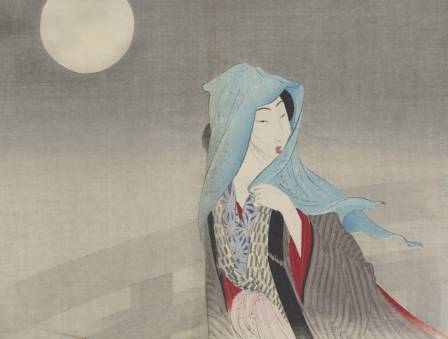
Cai’s own interest in the field began around 2000, when she encountered Zhou Fang’s Court Ladies Adorning Their Hair with Flowers at the Shanghai Museum. Paintings of this type, known as shinv tu or “paintings of court ladies,” typically present idealized images rather than portraits of specific individuals.
“After a decade of study, I wanted to share my findings, not from a strict art-historical perspective, but in terms of how we visually perceive these women,” Cai explained.
In her lectures, Cai presents parts of her extensive digital collection of female portraits, spanning from the 4th century to the late Qing Dynasty (1644–1911).
Women in Domestic Spaces
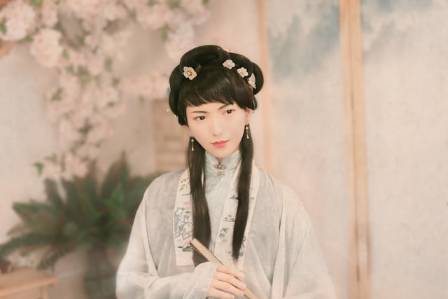
Most of the figures depicted are from upper-class backgrounds, shown engaging in domestic activities within their homes.
“Ancient Chinese women had a public role to uphold,” Cai said. “Their physical movement was largely confined to the home, their activities limited to household tasks, and their consciousness was shaped by the expectations of their family.”
Paintings often feature women in their private chambers or garden spaces, performing tasks such as embroidery, spinning, teaching children, reading, or brewing tea. Leisure activities, including playing instruments, composing poetry, applying makeup, or gazing into the garden, also appear frequently.
These private gardens were generally designed by men for relaxation, with women often portrayed as part of the decorative environment—complementing the plants, flowers, and rocks. Women adopted behaviors and postures dictated by societal expectations, primarily set by men, rather than pursuing personal ambitions.
Notable Exceptions
Cai highlighted one example: a painting depicting 13 female students receiving instruction from Yuan Mei, a Qing Dynasty poet and scholar.
In 1792, Yuan Mei taught local young women in Hangzhou, a remarkable event for the time. Artist You Zhao captured the teaching session, while Wang Gong contributed the background scenery.
A later copy by Qing scholar Ye Yanlan exists at the Zhejiang Provincial Museum, while the original You Zhao painting resurfaced at Christie’s Hong Kong in 2010.
“In some households, women’s achievements were encouraged by fathers, brothers, or husbands,” Cai noted. “For example, members of the 17th- and 18th-century Jiaoyuan Poetry Society had their poetry published and documented, enhancing their families’ prestige.”
Some women in history were writers, editors, and painters, and a few even earned a living professionally. However, such cases were rare and typically involved women from affluent families or with influential spouses.
Women at Work in Art
Another recurring theme in historical paintings depicts women engaged in labor, including washing, weaving, and embroidery.
The Ploughing and Weaving painting at the China National Silk Museum illustrates cooperative labor during the silk production season.
“These works don’t celebrate women’s skills or independence,” Cai emphasized. “Instead, they reinforce traditional roles: men plough, women weave.”
Reflections on Women’s Roles Today
During a Q&A session, an audience member asked if modern women’s activities are much broader than in the past.
“It’s a complex issue,” Cai responded. “Even though we now have more opportunities, women sometimes still limit themselves or adopt false perceptions of their own capabilities.”
Cai Qin’s lectures shed light on how historical visual culture both reflected and shaped societal views of women, highlighting the constraints, achievements, and nuanced lives of women in Chinese history.